Understanding the House Tax Bill

Taxes affect our daily lives, and the House is working on a bill to “reform the tax code.” If taxes are drastically altered, it won’t just affect our personal taxes; Medicaid funding could be affected as well. For example, Senator Cotton called for the repeal of the Obamacare individual mandate through tax reform. That’s why it’s so important to stay on top of what’s happening.

A House committee released the bill, the “Tax Cuts and Jobs Act,” this afternoon, and it’s a very long read. 

This is just a first version. They will revise the bill and try to pass it through the House by Thanksgiving to send to the Senate in order for it to take affect by January 1, 2018. 

Take the time to try to understand it and respond if necessary. Here are a few articles to help you understand what’s going on:

Make sure you understand this for yourself, and contact your U.S. Senators with your questions, concerns, and comments!

    Updated PASSE Information

    Click the image below to receive comprehensive, updated information on the PASSE systems (as of October 2017). The deadlines have been updated, and if you were wondering what the purpose of the model is, here’s your chance to find out!

    Screen Shot 2017-10-31 at 9.36.43 AM

    Three PASSEs were officially certified on October 18: Arkansas Advanced Care, ARkansas Total Care and Empower Healthcare Solutions. Read more about them in the image below:

    Screen Shot 2017-10-31 at 10.20.51 AM

    Therapy Cap PA Requests: Q & A 


    The PT, OT, and SH Association Presidents regularly meet with DHS and AFMC to discuss issues that providers have when requesting Prior Authorizations (PAs) for children who need therapy over the 90-minute cap. These are the results of their latest meeting.

    Keep track of your questions and email them to be discussed at the next meeting.


    The Recap of ArkSHA, ArPTA, and AROTA meeting with AFMC and DDS on 08-25-17:

    The following are issues raised by members of ArkSHA, ArPTA and AROTA, and responses from AFMC and DDS.

    Issue: Shifting of Units Between Therapist and Assistant

    There are still questions regarding the length of time it is taking to shift units from PT/OT/ST to PTA/COTA/SLPA and vice versa. AFMC reports that following completion of the large number of DMS-640 form validations AFMC received many change requests to prior authorizations. AFMC encouraged their staff to continue to process initial DMS-640 validations and that all changes would need to be checked before processing. Currently, AFMC states that they are about 10 days out on corrections and Jarrod McClain, AFMC Director for Clinical Review, indicated that their staff are working diligently to get the updates made as quickly as possible. The updates to the PA’s flow to DXC each night and providers can start billing immediately upon receipt of the changes.

    In addition, Jarrod stated that AFMC is working to decrease the timeframe for corrections but they have to ensure that they are getting the correct request ID modified. According to Jarrod, it takes a few days to check and update the claims data extract file. If providers continue to see a delay, please contact Jarrod McClain at AFMC. He will personally see that his staff checks on the status of their request and get it processed.

    Issue: Use of evaluations from preschool programs to kindergarten

    There was concern from many members as to how long their evaluations will be valid in a schools setting. The consensus is that if the evaluation utilized is an evaluation conducted by a non-educational agency, or by a provider who is not contracted by an educational agency, then the evaluation is good for one year. If an educational agency or a contractor of the educational agency conducted the evaluation, then the evaluation falls under the school-based evaluation criteria of every 3 years.

    Issue: Some prior authorizations were only approved after sending in a cover sheet restating information included in the evaluation.

    AFMC was aware of this issue and is working to improve their processes for approval. In the meantime, providers are encouraged to highlight justification for medical necessity in the evaluative reports, including statements about how the services recommended are under accepted standards of practice to treat the patient’s condition, how services are complex and will require the skilled services of a qualified therapist, and a statement about therapy prognosis (See Medicaid Manual Section II). Though a cover letter outlining these justifications is not required, providers are encouraged to consider using a cover letter attached to the evaluation to make these medical necessity statements more salient for reviewers.

    Issue: Are reviewers actually reading the evaluations or just looking for technical language?

    AFMC assured us that they are reading all evaluations. They perform both technical and administrative reviews in order to ensure that all requirements of the evaluative reports are included, as well as a medical necessity review to ensure that justification for medically based services is included.

    Issue: I heard that AFMC was using nurse reviewers and not experienced pediatric therapists in each discipline. Is this true?

    AFMC utilizes registered nurses to perform the initial reviews of all PA requests. If a request is denied than the request is assessed by an experienced licensed therapists specific to the discipline. If the therapist agrees with the denial it is then sent to a board certified pediatric physician for final review. If a provider does not agree with the denial or would like to request reconsideration they may do so by resubmitting the request.

    Issue: What about beneficiaries who receive services from multiple providers for the same service?

    AFMC and DDS continue to emphasize the need for care coordination for beneficiaries with multiple providers of the same modality (physical, occupational or speech therapy). Dr. Chad Rodgers, AFMC Medical Director, attended our meeting and reported that the pediatricians and PCPs he has been in contact with are interested in understanding what situations justify the appropriate signing off on multiple prescriptions. He asserts that although he can’t speak for all physicians he personally looks at every request for therapy services before signing them. He recognized that it is difficult to for most physicians to understand why a child needs multiple services. He and assistant director of DDS Elizabeth Pittman stated that it would be beneficial to state on the DMS-640 the specific need for a particular service and that the beneficiary will need the services of multiple therapists. AFMC and DDS are considering a change to the DMS-640 forms in the future to accommodate the different services provided within one discipline. Elizabeth Pittman reported that the new MMIS system (which has an anticipated implementation of summer of 2018) will be less burdensome on providers and will have the ability to disclose is the beneficiary is receiving services from other providers. Until then, providers need to ask during the intake process if the recipient is receiving therapy services from any other provider, and then coordinate as needed. According to Jarrod McClain, only 10 providers have bumped into challenges with the multiple provider issues thus far.

    Issue: For short term scripts (i.e. ortho docs who write for 2-6 weeks) that then need an extension once the patient has had a follow-up recheck. What is the most efficient way to keep PA’s from having to be unnecessarily done?

    Providers can simply go into Review Point, and click the extend button. The codes will be transferred over and the new prescription can be uploaded. Information about the progress of the patient and continued medical necessity should be included with the extension.

    Issue: It has come to the attention of AFMC and DDS that some facilities are sending notices to parents that they should not allow services for their child in the school due to the need for a PA if the school and independent facility are both treating the beneficiary.

    Although Medicaid is a “medical” assistance program, it recognizes the importance of school-based services. The federal Medicaid program actually encourages states to use funds from their Medicaid program to help pay for certain healthcare services that are delivered in the schools, providing that federal regulations are followed. The associations stand with AFMC and DDS that sending notices to parents regarding billing for services between schools and independent clinics is not recommended. IDEA laws require schools to provide services to beneficiaries if needed for educational purposes. Schools also must provide therapy that is medically necessary. Therapy services outside of the school setting should not replicate services provided by therapists contracted or working with the school.

    Issue: A representative at DHS has stated that physical therapy re-eval codes are no longer a valid code as of July 1st. Has anything changed in the recent rule change?

    Reevaluation codes are not currently and haven’t been a reimbursable code. The two billable codes for physical therapy services are 97001 and 97110.

    Advocates Gather to Celebrate Medicaid’s 52nd Birthday

    Medicaid Saves Lives was privileged to partner with Arkansas Advocates for Children and Families, Arkansas Citizens First Congress, and the Arkansas Chapter of the Academy of Pediatrics to host a celebration at the Capitol for Medicaid’s 52nd Birthday. Even if you missed it, you can still watch the festivities!

    IMG_0372

    Senate pulls All-night Session to Vote on Skinny Repeal

    The Senate is set to vote on a newly written bill, referred to as the skinny repeal, barely released an hour ago. They will vote around midnight.

    Read the full text.

    IMG_0319

    Even Senators dislike it, but they may still vote it through.
    IMG_0320

    Watch live as they vote:
    IMG_0325

    Track the votes.

    Senate Voted to Proceed: Now What?

    Earlier today, the Senate voted 51-50 to proceed with debate over the health care bill. With only 2 opposing Republican votes, just 1 shy of what was needed, plus a tie-breaking vote from VP Pence, the motion succeeded. We now move toward serious Medicaid cuts that can’t be reversed once set into motion, and it will take all of us standing together to prevent it.

    Watch how each Senator voted.

    IMG_0281

    Data shows that any bill, amendment, or revision proposed so far will be detrimental to Medicaid recipients. We (MSL) oppose the per capita caps or block grants that have been proposed because they will shift great stress to state budgets and reduce the ability to give recipients the coverage they need. We oppose ending expansion because it will result in millions losing coverage. In addition, the aforementioned bills remove essential health benefits and pre-existing condition protections, which would be detrimental to all Americans, making coverage unaffordable if not unattainable for many.

    As part of the AACF statement on how this vote will affect Arkansas, Arkansas Advocates for Children and Families said: “Today’s vote shows that we have more work to do. Despite an outcry from health care professionals, business owners, families, and even governors, many Senators have decided to move forward with legislation that will destabilize the entire health care system. Too much is at risk to continue down the current path. Children with special needs, elderly enrollees, and people with chronic conditions who rely on Medicaid will lose coverage. Health care for families that were able to purchase affordable coverage, many for the first time, is also at risk.

    The people have spoken—any proposal that falls short of guaranteeing everyone affordable, comprehensive coverage, is unacceptable. Now, it’s time for Congress to listen. We ask that Senator Cotton and Senator Boozman commit to voting no on any bill that endangers the health of tens of thousands of Arkansans. Anything less is breaking their promise to all of us.”

    Now that we understand the ramifications haven’t changed, here’s what will happen next:

    1. The Senate will debate for 20 hours. By rules, to be fair, Republicans and Democrats get equal time of 10 hours each.
    2. The Senate will probably vote a bunch of times on amendments and such.
    3. Then the Senate will vote on a finalized bill and send it to the House.
    4. The House will vote, and if it passes, they’ll send it to President Trump.

    See a flow chart.

    As you can see, if you oppose Medicaid cuts, you can’t give up. Not a single Democrat voted to proceed, and we only need a few Republicans to oppose to keep any bill from moving forward. We were only one opposing vote short. Take a breath, renew your determination, and communicate in any way you possibly can!

    Contact your Senator!

    Email your Senators’ legislative aids!

    IMG_0069IMG_0070

    Stand strong!

    Take Action: Graphic to Share

    The news changes like the wind. Are they voting or aren’t they? Repeal and replace or repeal without replace? No matter what’s happening with them, we need to continue to make our needs and wants abundantly clear.

    Many are saying that they can’t get through to Senators via phone calls. Don’t stop calling because they are counting the calls. 866-426-2631

    However, social media is a great way to publicly contact your Senators, especially since they won’t post their direct email addresses.

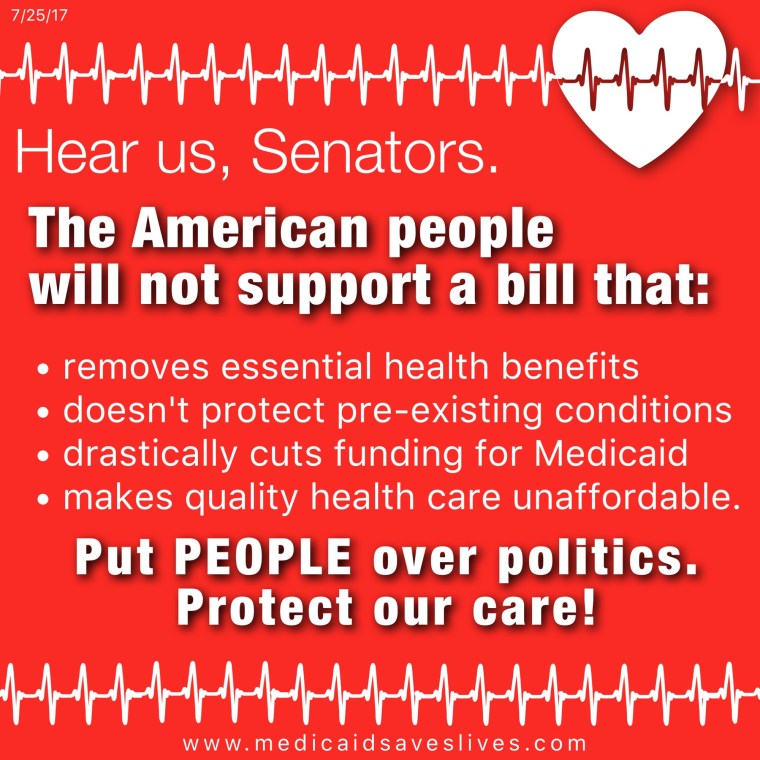
    Share this graphic with them and tag them in your posts. Use hash tags like #BCRA or #ProtectOurCare to help others see your posts!

    IMG_0155

    Medicaid Saves Lila

    IMG_6439

    This is my sweet girl, Lila. She’s active and intelligent. She loves to swing, eat blackberries, and paint. Don’t you dare turn your back on her because she’s mischievous too! She loves her friends, family, and kitty-cats. She is absolutely the most wonderful thing I’ve ever done with my life, and she just so happens to have Down Syndrome.

    IMG_0135

    She might smile a lot, but her life hasn’t been easy. Born almost a month early due to multiple complications, Lila spent some time in the NICU. She’s overcome multiple illnesses and surgeries, including open heart surgery soon after her first birthday and many others since. In fact, we have received 2 new diagnoses this year alone, and she’ll have at least one surgery.

    IMG_0134

    My husband and I are proud Arkansans. We’re educated, hard-working, tax-paying citizens. At the time of Lila’s birth, we lived in another state. Despite the fact that we both had good jobs and primary insurance coverage, we struggled to provide for her needs. When we moved back to Arkansas, Lila was significantly delayed in many areas.

    IMG_6519 Our friends told us about TEFRA, a type of Medicaid funding that provides for disabled children and that requires the family to pay a premium. Our primary insurance pays first for all that it will cover, and Medicaid makes sure that Lila doesn’t go without the rest. We gladly pay a monthly fee for this essential assistance!
    Lila now receives medical treatments that she needs from specialists and Occupational, Physical, and Speech therapy. She attends a school where she is loved and accepted, and they practice important skills in the classroom to prepare her for mainstream Kindergarten. Lila is constantly learning the necessary skills to be independent: speaking new words, learning to feed herself, to dress herself, and to climb stairs. One of my favorite moments was the first time I ever heard her say, “Ma Ma.” Can you imagine waiting 4 years to hear that?

    IMG_2776We never expected to need Medicaid. Even though we’d paid taxes for years for Medicaid, we didn’t know that a person’s life can change drastically in a moment – a car accident, a stroke, a job loss, a cancer diagnosis, a chromosomal difference – to cause them to need Medicaid. We thought that if we worked hard enough, we could take care of ourselves and Lila. But no matter how hard we work or what we give up, we just can’t afford to provide for all of Lila’s needs. Now, because of Medicaid, Lila is thriving, and we’re not being crushed under the weight of Lila’s ever-growing medical debt. We have hope that she will continue to develop and someday be a valued, contributing member of society. We are incredibly thankful for Medicaid.
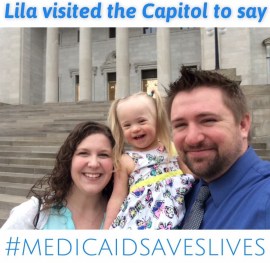
    We tell everyone we can how essential Medicaid is! Lila has visited the Capitol and state lawmakers multiple times to represent herself and friends like her. Since she can’t speak much yet, my husband and I tell them how much Medicaid is literally saving lives. I can’t wait for the day that Lila will tell them herself. She brings a beauty and light to this dark world, and we will never stop fighting for her!

    IMG_7902

    Revised Senate health care bill: Where are we now?

    A revision of the BCRA Senate Health Care   bill has been released, but what’s different? We have the one-stop-shop for understanding the bill for yourself.

    Some reports say that they want to vote as early as Tuesday. Get to reading and then get to calling!

    Every call matters. Here’s the number for Senators across the nation: 866-426-2631

    Find your states US Representative & contact his/her office

    Find your state’s US Senator & contact his/her office

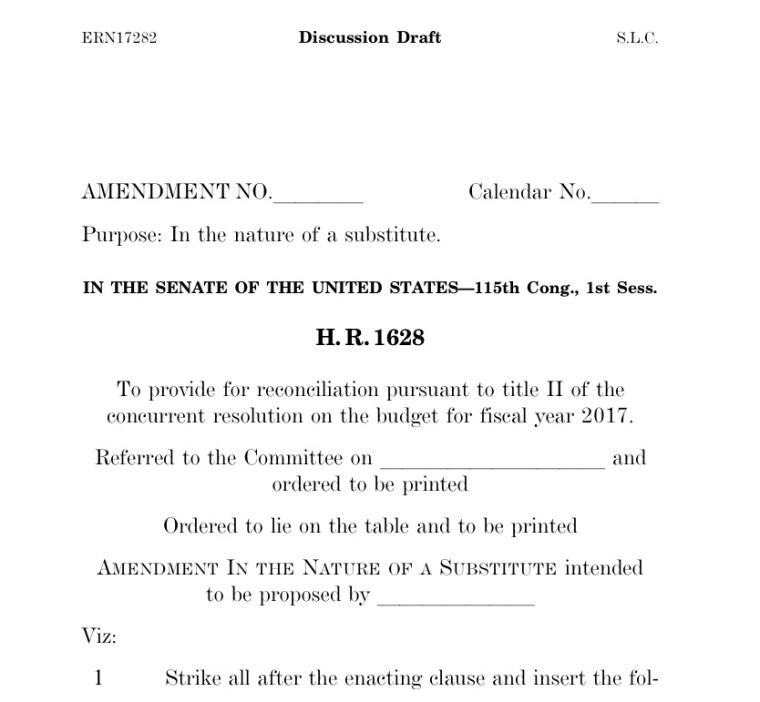
    Read the new revised bill to make sure you discover everything for yourself.
    Check out these resources to guide you:
    IMG_0121


    What was the original bill?

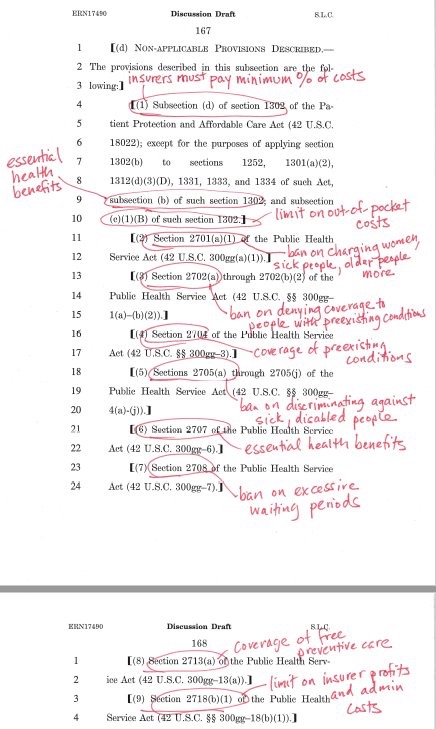
    Full text of the original bill. Click on the image below, and  use the resources above to help you.
    IMG_9664

    How the BCRA will affect you, even if you don’t receive Medicaid

    The topic of health care is not only in some ways oppressive on our minds but also overwhelming these days. Months ago, the House wrote the American Health Care Act (AHCA) in an effort to repeal and replace the Affordable Care Act (ACA), and they passed it on to the Senate. Then, the Senate must have found fault with the AHCA because they wrote their own version of the bill called the Better Care Reconciliation Act (BCRA). If the Senate passes their bill, it will have to go to the House for their approval. We have seen months (years!) of coverage on the subject of health care, and it’s downright confusing at this point.

    Let’s try to clarify some of the confusion by pulling a few articles together to show what will change with the Senate health care bill, the BCRA. (The AHCA doesn’t matter if the House approves the BCRA.) This research will show that nearly everyone who isn’t extremely wealthy will be affected negatively by the bill as it stands proposed today. If you care about, or are affected by, any of the following categories, you can expect changes to come to you and your family if this bill were to pass.

    1. Medicaid Funding

    “[T]he Senate bill would radically restructure all parts of Medicaid—not just the expansion provided under the Affordable Care Act.” 1

    “The cumulative impact: a $772 billion spending cut over 10 years, versus current law, and 15 million fewer people enrolled in Medicaid in 2026.” 2

    2. Essential Health Benefits

    “But another change might have more far-reaching effects: eliminating the Affordable Care Act’s ‘essential health benefits,’ or EHBs. That shift could affect almost everybody, including the 156 million Americans who receive health coverage through their employers.” 5

    Here’s a rundown of what they are: 4, 5, 6

    • Outpatient care — scheduled doctor visits, (outpatient care you get without being admitted to a hospital)
    • Emergency room trips — ER visits and ambulance trips.
    • In-hospital care — All care people get as hospital patients, such as surgery.
    • Pregnancy, maternity and newborn care — before and after birth
    • Mental health and substance abuse disorder services — (this includes counseling and psychotherapy)
    • Prescription drugs
    • Rehabilitative services and habilitative services – help recovering from an injury or illness, but also treatment (therapy) for kids with autism or cerebral palsy.
    • Lab tests
    • Preventive services — vaccines, cancer screenings, etc.
    • Pediatric services — including dental and vision care for children.

    3. Pre-existing Conditions Protections

    “The BCRA retains the popular ACA provision that people with pre-existing conditions cannot be charged more for insurance because of their health status. However, weakened essential health benefits would hurt people with pre-existing conditions.” 1

    “The Senate bill would retain some limits. It wouldn’t, for example, allow states to waive the prohibition on discriminating on the basis of preexisting conditions. But it would allow states to remove caps on out-of-pocket spending for exchange plans.” 3

    4. Subsidies & Taxes

    “One major difference is that the Senate bill provides subsides only up to 350% of the federal poverty level starting in 2020; the ACA currently provides subsidies up to 400%. In other words, while individuals earning up to $47,550 qualify for help under the ACA, only those earning up to $41,580 would qualify under the Senate plan. This means far fewer people will qualify for aid.” 1

    Sources:

    1 4 Things to Know About the Senate’s Health Care Bill

    4 ways you probably didn’t know the Republican bill changes Medicaid

    3  Crazy Waivers

    4 What Are ‘Essential Benefits’ in GOP Health Care Bill Debate?

    5 The 10 ‘essential’ benefits that could be eliminated under the GOP health care plan

    6 What Marketplace health insurance plans cover