Revised Senate health care bill: Where are we now?

A revision of the BCRA Senate Health Care   bill has been released, but what’s different? We have the one-stop-shop for understanding the bill for yourself.

Some reports say that they want to vote as early as Tuesday. Get to reading and then get to calling!

Every call matters. Here’s the number for Senators across the nation: 866-426-2631

Find your states US Representative & contact his/her office

Find your state’s US Senator & contact his/her office

Read the new revised bill to make sure you discover everything for yourself.
Check out these resources to guide you:
IMG_0121


What was the original bill?

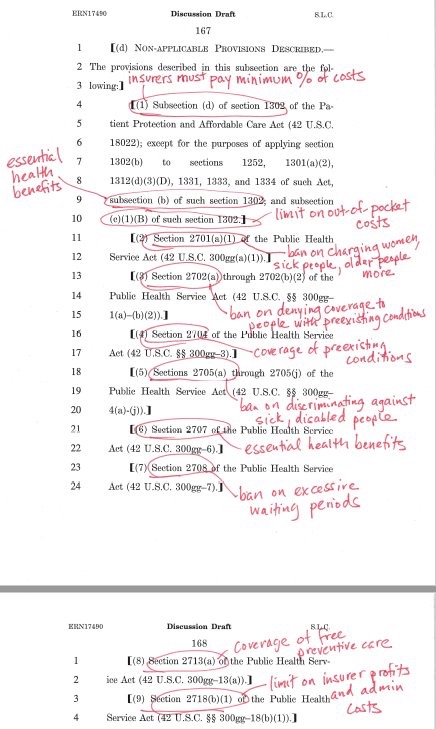
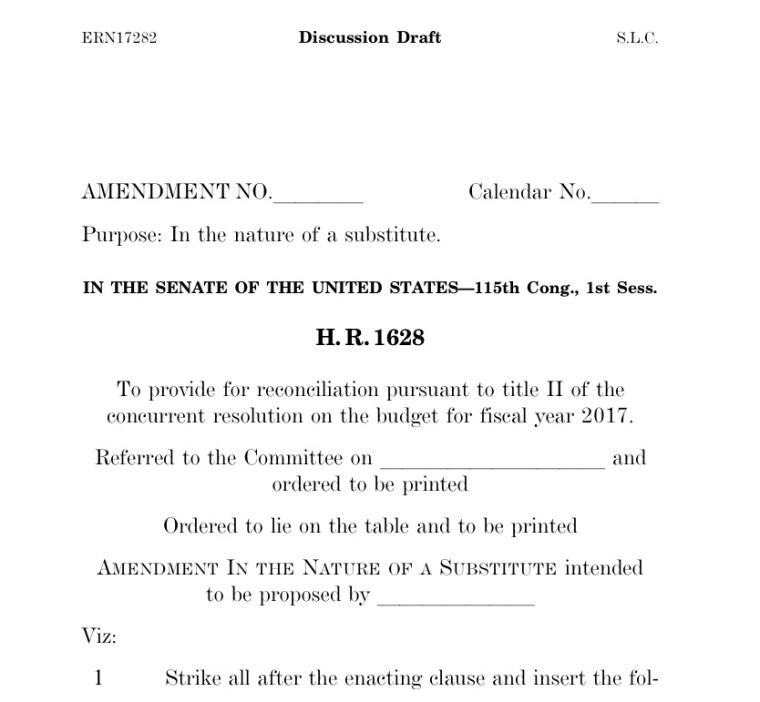
Full text of the original bill. Click on the image below, and  use the resources above to help you.
IMG_9664

How the BCRA will affect you, even if you don’t receive Medicaid

The topic of health care is not only in some ways oppressive on our minds but also overwhelming these days. Months ago, the House wrote the American Health Care Act (AHCA) in an effort to repeal and replace the Affordable Care Act (ACA), and they passed it on to the Senate. Then, the Senate must have found fault with the AHCA because they wrote their own version of the bill called the Better Care Reconciliation Act (BCRA). If the Senate passes their bill, it will have to go to the House for their approval. We have seen months (years!) of coverage on the subject of health care, and it’s downright confusing at this point.

Let’s try to clarify some of the confusion by pulling a few articles together to show what will change with the Senate health care bill, the BCRA. (The AHCA doesn’t matter if the House approves the BCRA.) This research will show that nearly everyone who isn’t extremely wealthy will be affected negatively by the bill as it stands proposed today. If you care about, or are affected by, any of the following categories, you can expect changes to come to you and your family if this bill were to pass.

1. Medicaid Funding

“[T]he Senate bill would radically restructure all parts of Medicaid—not just the expansion provided under the Affordable Care Act.” 1

“The cumulative impact: a $772 billion spending cut over 10 years, versus current law, and 15 million fewer people enrolled in Medicaid in 2026.” 2

2. Essential Health Benefits

“But another change might have more far-reaching effects: eliminating the Affordable Care Act’s ‘essential health benefits,’ or EHBs. That shift could affect almost everybody, including the 156 million Americans who receive health coverage through their employers.” 5

Here’s a rundown of what they are: 4, 5, 6

  • Outpatient care — scheduled doctor visits, (outpatient care you get without being admitted to a hospital)
  • Emergency room trips — ER visits and ambulance trips.
  • In-hospital care — All care people get as hospital patients, such as surgery.
  • Pregnancy, maternity and newborn care — before and after birth
  • Mental health and substance abuse disorder services — (this includes counseling and psychotherapy)
  • Prescription drugs
  • Rehabilitative services and habilitative services – help recovering from an injury or illness, but also treatment (therapy) for kids with autism or cerebral palsy.
  • Lab tests
  • Preventive services — vaccines, cancer screenings, etc.
  • Pediatric services — including dental and vision care for children.

3. Pre-existing Conditions Protections

“The BCRA retains the popular ACA provision that people with pre-existing conditions cannot be charged more for insurance because of their health status. However, weakened essential health benefits would hurt people with pre-existing conditions.” 1

“The Senate bill would retain some limits. It wouldn’t, for example, allow states to waive the prohibition on discriminating on the basis of preexisting conditions. But it would allow states to remove caps on out-of-pocket spending for exchange plans.” 3

4. Subsidies & Taxes

“One major difference is that the Senate bill provides subsides only up to 350% of the federal poverty level starting in 2020; the ACA currently provides subsidies up to 400%. In other words, while individuals earning up to $47,550 qualify for help under the ACA, only those earning up to $41,580 would qualify under the Senate plan. This means far fewer people will qualify for aid.” 1

Sources:

1 4 Things to Know About the Senate’s Health Care Bill

4 ways you probably didn’t know the Republican bill changes Medicaid

3  Crazy Waivers

4 What Are ‘Essential Benefits’ in GOP Health Care Bill Debate?

5 The 10 ‘essential’ benefits that could be eliminated under the GOP health care plan

6 What Marketplace health insurance plans cover

Allen

IMG_0014Allen Shimkus
Age 4
Diagnosis: Agenesis of the corpus callosum

(ACC) is a rare birth defect (congenital disorder) in which there is a complete or partial absence of the corpus callosum. It occurs when the corpus callosum, the band of white matter connecting the two hemispheres in the brain, fails to develop normally.

Allen NEEDS PT OT AND SPEECH THERAPY to teach his brain to do everything from chewing food to walking.

My 4 year old son Allen (pictured here) can not fully dress himself or walk or even speak but he has the potential to do all !!!! Please help him !!

Ari

IMG_9906My sweet boy, Ari, has had 2 shunt revisions, ETV placement and will be having a major skull reconstruction surgery in 2 months. He is still working on head control as well as feeding. He has overcome so much and he has so much further to go … without Medicaid he would not survive. Being a single parent, the support given through Medicaid help ensure that he will receive all the healthcare support that he so desperately needs. I work full time and have private insurance personally, he is also on my plan, but TEFRA helps allow for him to have continued therapy, the wheelchair that helps him participate in all community/school activities and surgeries that he needs to survive and thrive. His birthday is this week and I can’t believe he will be 4!!

Facts & Faces of Medicaid

Share the facts and faces of Arkansas Medicaid.

Show people who Medicaid cuts would hurt. Don’t give up. Keep calling and sharing.

Data source is credited. We have gathered several of KFF’s posts here to save you some time.

Senate Healthcare Bill Released

Updated: 7/9/17 4:08 pm

By now, you’ve probably seen more than 10 different news stories about the Senate healthcare bill. Maybe 10 per day! But what’s the truth? Will it really cut Medicaid? Will it really affect everyone? Well, the only way for you to know is for you to read it yourself. And we can help you.

You need to read, but also, don’t stop responding. The Senate wants to vote on this bill as soon as they can come to an agreement. They’re having many negotiations behind closed doors. Let your voice be heard through those doors! These are the Arkansas Senators to contact:
Sen. John Boozman (202) 224-4843
Sen. Tom Cotton (202) 224-2353

If you’re not from Arkansas, this info pertains to you as well. Every call matters. Here’s the number for Senators across the nation:  866-426-2631

Find your states US Representative & contact his/her office

Find your state’s US Senator & contact his/her office

Contact information for all of AR Congressmen.

What’s truly in the bill?

Make sure to read the bill to form your own educated opinions. Click on the image below to access the full text, and  use the resources above to help you.
IMG_9664

Catch up on the Provider Led Model (PASSE)

PASSE stands for Provider-owned Arkansas Shared Savings Entities, and this new Provider-led model is required by a law passed by the Arkansas State Legislature last spring. DHS has been told to achieve a certain amount of Medicaid cost savings, and the theory is that this model should achieve them through better management of care. Over the next year and a half, we will see a shift in the management of Medicaid care for certain recipients under the Developmental Disabilities Services and Behavioral Health Services Divisions of DHS through the implementation of this model.

During the transition time, each recipient will undergo an Independent Assessment to determine services given, and then each recipient will be assigned to one of the PASSEs. Right now, we don’t know how many PASSEs there will be or which partners each will include. That should all become clear after June 15, 2007. Once the recipient receives information about which PASSE he or she has been assigned to, he or she will have 90 days to switch to a new PASSE if desired. Everyone will be on a different timeline, so recipients won’t really be able to compare situations early on.

This transition will take place throughout 2017 and 2018 as PASSEs slowly take on responsibility. In 2019, the PASSEs will take on all responsibility of managing the care and funds for each recipient they’ve been assigned. Providers will then bill the PASSE for each client, which means that the providers have to participate in probably all PASSEs to be “in network” for their current clients and future clients.

As said before, this will only affect certain clients – classified as Tier 2 and Tier 3 – for both DD and BH. Tier 2 and 3 people are defined differently by DD and BH, but basically it’s determined by level of care needed.

As we’ve all seen, this is very complicated, and a lot of information has already been shared. Here’s your chance to catch up!

Basic questions answered

See DHS Presentations from public meetings that occurred in April 2017.

Read the law that was passed during this past spring session.

See DHS’s answers to your questions.

See in depth information from DHS about the PLM.

Providers: PASSE Information

This information regards Act 775 (Provider Led Organized Care). If you haven’t read that, please do.

Deadlines are approaching with the formation of the PASSEs. The letter of intent deadline was extended to June 15, but many want your commitment by June 1. That being said, some of you still have questions.

First of all, will you be affected? You may or may not serve Tier 2 and/or Tier 3 patients of the BH and/or DDS populations. If you don’t, this may not affect you. However, if you want to keep your options open to serve them in the future, you probably need to at least participate in PASSEs. In the DD population, a Tier 1 patient can become a Tier 2 or 3 simply by being accepted into the Waiver program, but as you know, with the long waiting list, they could continue to receive services from their current providers. If you aren’t participating, that person will have to find another provider.

How many PASSEs are there? Why does this seem so secretive? Well, there are at least 4 forming. One PASSE has been pretty public, has released some plans, and were involved in passing the law.  They have held one public meeting. Others have formed and are trying to meet the regulations by June 15. These are common business practices, and some can’t release info until legalities are finalized. I hope to see public meetings from the others soon. It’s a pretty competitive situation right now, so a lot of information is not public. Each PASSE will try to convince you as to why you should invest with them. They are competing since there are only so many partners and investors available. There is a time limit for them, but you still have a little time to make a good investment decision. However, if you report to a board, you probably want to get them info as soon as possible.

Why should you invest? Part of the rules are that each PASSE must collect a savings/investment fund by December 2017 to be able to assume risk of managing funds for Tiers 2 and 3 of DDS and BHS. So that’s one reason each PASSE needs investors to give them money. Investors in a PASSE take on the risk together but also share in the rewards if money is saved. If each PASSE does not raise enough money and show a diverse group of partners to serve each need around the state, they will not pass certification. That’s why it’s pretty competitive to get you to invest with them and only them.

How are investment and participation different? As I understand it, participation requires nomoney from you. You can officially participate with any or all PASSEs once they’re certified to take on clients in order to be “in network” for the people they manage Medicaid funds for.

Any other important info? Each affected client will be attributed to one PASSE once he/she has received the Independent Assessment. The patient or caregiver will have 90 days to change to another PASSE. As said before, if you’re not a participant in that PASSE, you may lose the client. The Independent Assessment will determine what services are medically necessary for each patient, so you might expect some changes there. A lot of details have yet to be worked out.

Where can you get details about each PASSE? If you want to invest or hear more from each PASSE, just send me your email address, and I’ll send it to them. They will send the info they’re allowed to share.

MSL Live on KABF 88.3

Lainey, our Founder, is going live tonight at 5pm on KABF 88.3 with 4 other panelists to talk about the state of Arkansas healthcare! We hope you’ll join her:

  • call in: 501-433-0088.
  • email questions/ comments: SpeakupAR@gmail.com
  • Listen http://www.kabf.org

Panelists are:

  • Marquita Little, Health Policy Director, AACF
  • John Sufna, Ph.D., Assistant Professor, Department of Psychiatry, UAMS
  • ShaRhonda Love, Executive director at Arkansas Minority Health Commission
  • Dianna Varady, Director, Arkansas Autism Resource and Outreach Center
  • Elaine Morrow, Founder of Medicaid Saves Lives

Speak Up Arkansas is a one-hour show which hopes to convey an “around the kitchen table” informal discussion that will give you needed information and perspective. The show and panelists hope you’ll call or email to ask about where or how to access services and learn more about navigating the systems.

The show usually starts with each panel member having 5 minutes to provide information about the particular focus area of their health practice, program, or policy work. This is a chance for all listeners to learn about the importance of health care and healthy practices, what services might be available, or what actions they can take to engage or learn more.